Breakfast packaging can make comparison difficult. A cereal may highlight whole grains, a yogurt may emphasize protein, and a breakfast bar may focus on convenience. The Nutrition Facts label gives you a more consistent way to compare similar foods, but it works best when you read several parts together instead of judging a product by one number.
1. Start with serving size
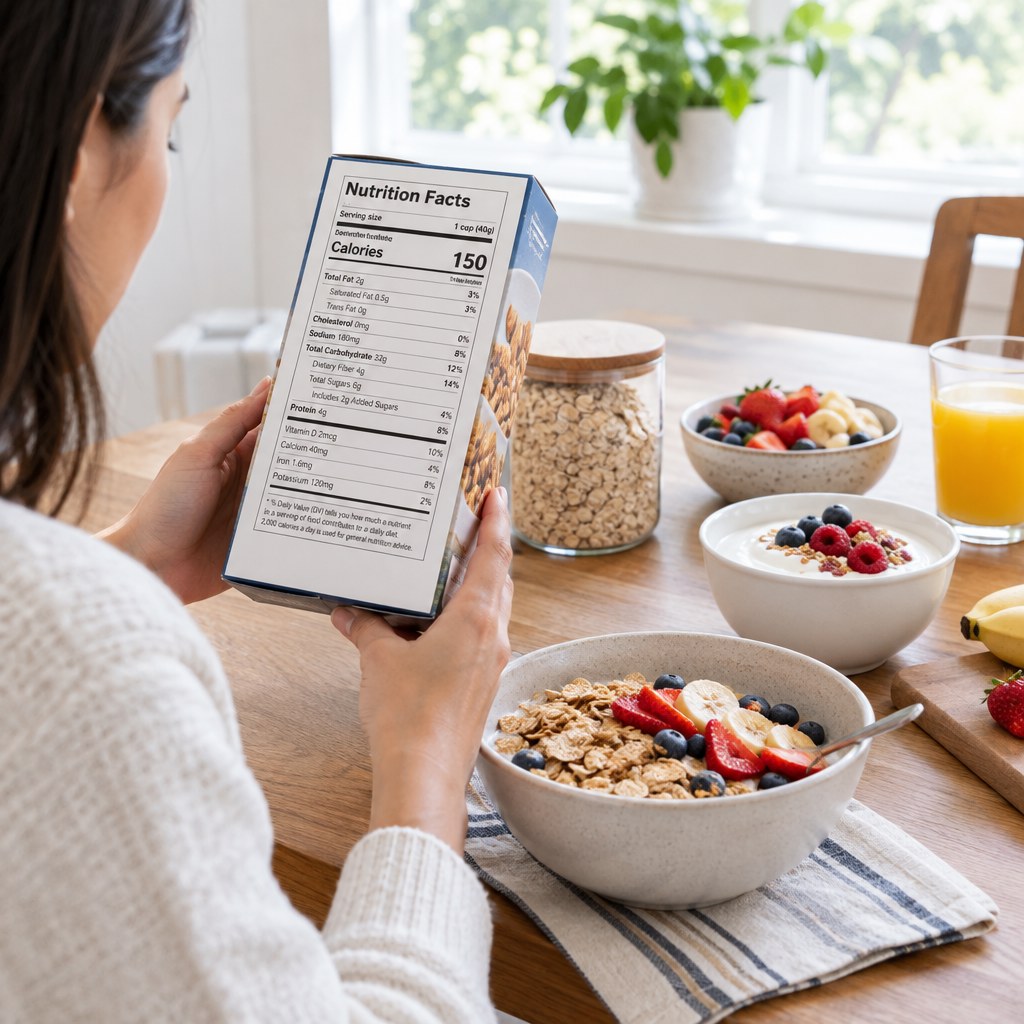
The U.S. Food and Drug Administration explains that serving sizes on Nutrition Facts labels are based on amounts people typically eat or drink; they are not recommendations for how much you should eat. Check the serving size and the number of servings per container before comparing calories or nutrients.
If two breakfast products list very different serving sizes, comparing the numbers on the front of each label without accounting for that difference can be misleading.
2. Use % Daily Value as a comparison tool
The % Daily Value (%DV) shows how much a nutrient in one serving contributes to a daily diet. FDA’s general guide describes 5% DV or less per serving as low and 20% DV or more as high. This can help you compare similar packaged foods without memorizing every nutrient target.
3. Look at fiber, added sugars and sodium together
- Dietary fiber: useful to compare when choosing among cereals, breads, oatmeal products and other grain-based breakfasts.
- Added sugars: check the dedicated line rather than assuming all sugars listed come from the same source.
- Sodium: worth comparing in breads, savory breakfast foods and many packaged convenience products.
- Serving size: always keep it in view so the nutrient numbers have context.
No single line determines whether a food fits your breakfast. Use the label as one decision tool alongside your overall meal and preferences.
4. Total sugars and added sugars are not the same line
The label lists Total Sugars and then identifies Added Sugars underneath. Total Sugars can include sugars naturally present in foods as well as sugars added during processing. The Added Sugars line helps you see the portion that was added.
5. Read the ingredient list too
Nutrition Facts and the ingredient list answer different questions. The ingredient list shows what the food contains, generally in descending order by weight. It can help you compare similar products when their marketing claims sound alike.
6. Example: comparing two breakfast cereals
| Check | Cereal A | Cereal B | What to notice |
|---|---|---|---|
| Serving size | Different sizes possible | Different sizes possible | Compare on a similar basis |
| Dietary fiber | Read grams and %DV | Read grams and %DV | Which offers more per comparable serving? |
| Added sugars | Read dedicated line | Read dedicated line | Do not rely only on front-of-pack wording |
| Sodium | Read mg and %DV | Read mg and %DV | Useful when products otherwise look similar |
| Ingredients | Review list | Review list | See what actually makes up each product |
The goal is not to declare one fictional cereal universally “good” and the other “bad.” The goal is to build a repeatable comparison process.
7. Put the packaged food back into the whole breakfast
A label describes one food, not your complete meal. A cereal, toast, yogurt or breakfast bar can be combined with other foods depending on your routine and preferences. For a broader framework, see our guide to building a balanced breakfast. If you prepare breakfasts ahead, our breakfast meal-prep and food-safety guide covers storage and practical prep considerations.
8. A quick label-reading routine
- Check the serving size and servings per container.
- Compare similar products on a similar serving basis.
- Review dietary fiber, added sugars and sodium.
- Use %DV to understand whether a nutrient amount is relatively low or high per serving.
- Read the ingredient list for additional context.
- Consider how the food fits into the rest of your breakfast.
9. Quick knowledge check
3-question check
Can you read a breakfast label more confidently?
10. Final thoughts
Reading a breakfast label does not need to become a hunt for a perfect product. Start with serving size, use %DV for context, compare nutrients that matter to the choice you are making, and read the ingredient list. That gives you a consistent method for comparing similar packaged foods.
Sources and editorial note
This guide is based on public U.S. Food and Drug Administration guidance for the Nutrition Facts label, serving sizes, % Daily Value, added sugars and ingredient lists. It provides general educational information and is not individualized nutrition or medical advice.