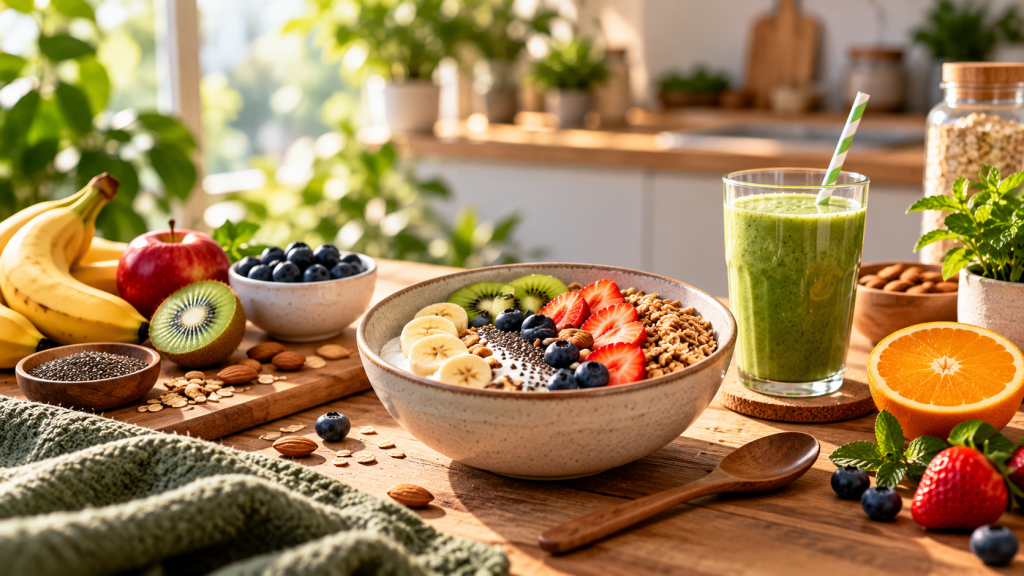
A balanced breakfast does not need a complicated recipe, a supplement stack, or a perfect macro target. A useful starting point is to combine foods that bring different strengths to the meal: a protein source, fiber-rich carbohydrates, fruit or vegetables, and—when it fits—the healthy fats already present in foods such as nuts or seeds.
1. Start with a simple breakfast framework
- Protein anchor: eggs, plain yogurt, beans, tofu, nuts or seeds can help make the meal more substantial.
- Fiber-rich carbohydrate: oats, whole-grain bread, fruit and other minimally processed plant foods add useful variety and fiber.
- Produce: whole fruit is an easy breakfast option; vegetables can also work in savory breakfasts.
- Practical fit: choose foods that match your morning schedule, budget, preferences and access—not an idealized routine.
2. Four breakfast styles to compare
Oats + fruit + nuts or seeds
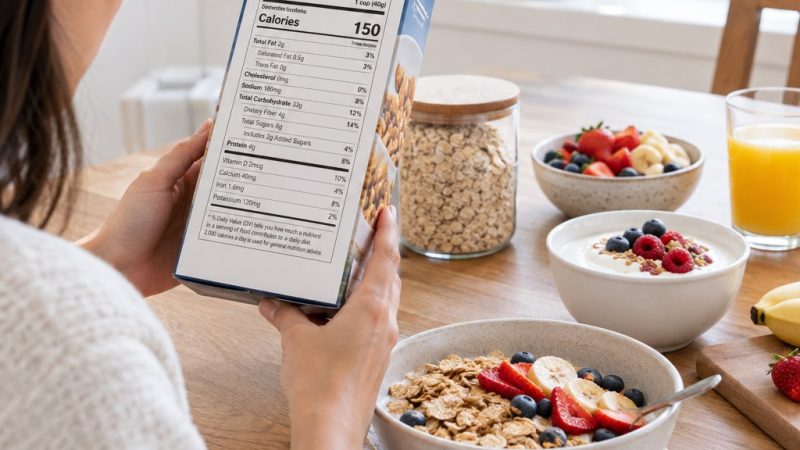
Plain oats make a flexible whole-grain base. Add whole fruit and nuts or seeds, then use milk, fortified plant milk or plain yogurt if that suits you. For packaged oats or cereals, compare added sugar and fiber on the Nutrition Facts label.
Eggs + whole-grain toast + produce
This is a simple savory template: pair eggs with whole-grain toast and fruit or vegetables. The exact portion can vary with appetite and individual needs.
Plain yogurt + fruit + whole-grain topping
Plain yogurt can provide a convenient protein base. Add whole fruit and a whole-grain topping, nuts or seeds. If you buy flavored yogurt or granola, check the label because added sugar can vary widely.
Beans or hummus + whole-grain bread + vegetables
Breakfast does not have to be sweet. Beans or hummus can make a practical plant-protein option alongside whole-grain bread and vegetables.
3. Quick comparison
| Breakfast style | Useful when | Check before choosing |
|---|---|---|
| Oats + fruit | You want a flexible whole-grain base | Added sugar in flavored packets or toppings |
| Eggs + toast | You prefer a savory breakfast | Whether the bread lists a whole grain prominently |
| Yogurt bowl | You want a quick no-cook option | Added sugar in flavored yogurt and granola |
| Beans or hummus | You want a plant-based savory option | Sodium in packaged products |
4. Make busy mornings easier
- No time to cookKeep plain yogurt, fruit and a simple whole-grain option ready.
- Need something portablePair a whole fruit with a simple protein-rich food and a whole-grain option that travels well.
- Prefer savory foodUse leftovers, eggs, beans or hummus rather than forcing breakfast into a sweet format.
- Shopping on a budgetOats, eggs, beans, seasonal fruit and store-brand whole-grain staples can form a flexible base.
If you prepare breakfast ahead of time, our breakfast meal-prep food-safety guide covers refrigeration, leftovers, storage and portable mornings.
5. Read packaged-food labels without overcomplicating it
For U.S. Nutrition Facts labels, the FDA says 5% Daily Value or less is considered low and 20% or more is considered high for an individual nutrient. As a practical comparison tool, look for more dietary fiber and less added sugar, saturated fat and sodium when comparing similar packaged breakfast foods. Our breakfast food-label guide walks through the comparison step by step.
- Check the serving size first
- Compare dietary fiber
- Check added sugars separately from total sugars
- Compare sodium in similar products
- Read the ingredient list for whole grains
- Choose based on the whole meal, not one number
6. A practical grocery checklist
You do not need every item. Pick a few foods from each group that you already like and can realistically use.
- Whole grains: oats, whole-grain bread or another minimally processed grain
- Protein options: eggs, plain yogurt, beans, tofu, nuts or seeds
- Produce: fresh or unsweetened frozen fruit, plus vegetables for savory breakfasts
- Flavor and healthy-fat options: nuts, seeds or nut/seed butter
- Convenience backups: simple foods with labels that fit your needs
7. Quick knowledge check
3-question check
Can you build a practical balanced breakfast?
8. Final thoughts
A good breakfast is one that works in the context of your overall eating pattern. Focus on food quality, variety and practicality instead of chasing a perfect breakfast formula. Individual nutrition needs can differ, especially with allergies, medical conditions or other dietary requirements, so personalized medical nutrition advice should come from a qualified health professional.
Sources and editorial note
This guide was developed using public guidance from the Harvard T.H. Chan School of Public Health Nutrition Source and the U.S. Food and Drug Administration Nutrition Facts resources. Vendixia does not claim hands-on product testing unless an article explicitly says so.