The material listed on a sleep mask can tell you something about feel and care, but it does not tell you everything about comfort or light blocking. Construction, padding, seams, strap design, face shape and fit all matter too. This guide compares common material families so you can narrow the options without assuming one fabric is automatically best.
1. What the material can—and cannot—tell you
- Surface feel: the outer fabric affects how smooth, soft or textured the mask feels against skin.
- Care: washing instructions vary by fabric, filling and construction.
- Structure: foam and padding can change eye space and bulk more than the outer fabric alone.
- Fit still matters: even a premium material can feel uncomfortable if the strap, nose area or overall shape does not suit you.
2. Silk sleep masks
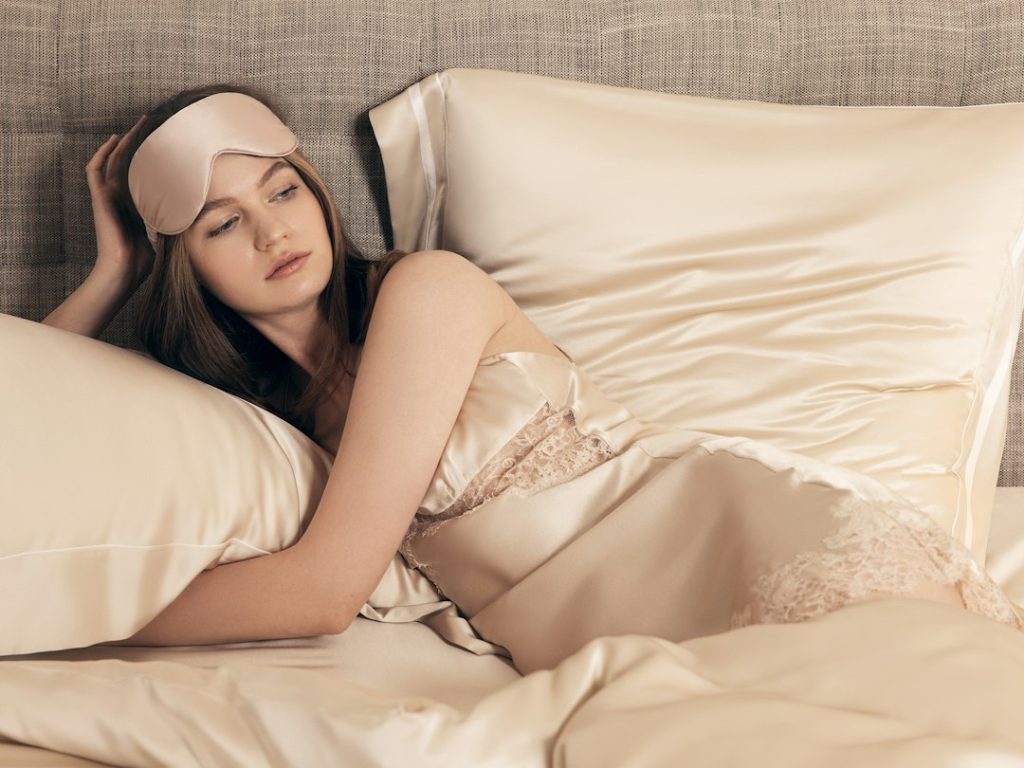
Silk is often chosen for its smooth surface and low-friction feel. When comparing silk masks, look beyond the fabric name: check whether the filling is washable, whether the care instructions fit your routine, and whether the strap hardware creates pressure when you lie on your side.
For a closer look at fabric labels, strap design and care, see our silk sleep-mask buying guide.
Affiliate disclosure: As an Amazon Associate I earn from qualifying purchases.
Example of a silk sleep mask
The Blissy Silk Sleep Mask is one example to compare if you are specifically considering a silk surface rather than a molded foam design. When deciding whether it suits you, check the current product details for materials, care instructions, strap design and fit rather than relying on the fabric name alone.
Check current price and availability on Amazon
Product details, price and availability can change. Vendixia does not display a fixed Amazon price.
3. Cotton sleep masks
Cotton masks can offer a familiar fabric feel and may be straightforward to care for, depending on the product. Thickness, weave, lining and padding vary widely, so cotton alone does not guarantee better light blocking or cooler sleep.
4. Polyester and synthetic fabrics
Polyester and other synthetic fabrics appear in many lightweight and molded masks. They can be used for smooth outer shells, stretch panels, moisture-managing fabrics or durable linings. Compare the complete construction and care label rather than treating every synthetic mask as the same.
5. Foam and contoured construction
Foam is usually about shape and structure rather than surface fabric. Molded or padded designs can create extra space around the eyes, but they can also add thickness. Side sleepers should pay particular attention to edge bulk, pillow contact and whether the mask shifts when the head turns. For more on shape rather than material, compare contoured vs flat sleep masks.
For a closer look at pillow contact, cup shape and strap placement, see our guide to sleep masks for side sleepers.
6. What materials work for a DIY sleep mask?
If you are making your own sleep mask, think in layers rather than searching for one universally “best” fabric. The outer layer provides the visible finish and some structure; the lining determines much of the face-side feel; optional batting or padding changes thickness and shape; and the elastic or strap affects stability. These parts need to work together with the pattern and with each material’s care requirements.
What is the best fabric for a sleep mask?
There is no single best fabric for every DIY mask. A smooth silk can suit someone prioritizing surface feel, cotton can be approachable for a basic fabric project, and synthetic fabrics can provide different combinations of structure, stretch and durability. For a first project, choose a fabric that matches the construction method, feels appropriate on the intended face-side layer and has care instructions compatible with the other layers.
Do you need batting or padding?
Padding is optional. A thin batting or other pattern-compatible layer can add body or softness, but additional thickness also changes the edges, nose area and finished bulk. Use the amount specified by the pattern when possible instead of assuming that more padding will improve comfort.
What should you use for the strap?
Elastic is common because it can hold a mask in place while allowing some movement, but its width, stretch and finished length affect pressure and stability. Adjustable straps are another option. Whatever construction you choose, test strap placement and approximate tension before permanently closing the mask rather than making a tight strap compensate for an unsuitable pattern.
For the complete DIY sequence, start with How to Make a Sleep Mask. For template scale, seam allowance and sizing decisions, use the sleep mask pattern and sizing guide.
7. Quick material comparison
| Material or construction | Why people consider it | What to check |
|---|---|---|
| Silk | Smooth surface feel | Care instructions, filling, strap hardware |
| Cotton | Familiar fabric feel | Thickness, lining, washability, light gaps |
| Polyester / synthetic | Wide range of lightweight designs | Fabric finish, breathability, seams, care |
| Foam / molded | Structure and potential eye space | Bulk, cup depth, pillow contact, heat retention |
8. Choose by use case, not fabric prestige
- Side sleeperPrioritize low-profile edges, buckle placement and stability against the pillow.
- Frequent travelerConsider packability, easy care and whether the mask keeps its shape in a bag.
- Sensitive to eye pressureCompare eye space and construction before focusing on the outer fabric.
- Simple-care priorityRead the actual washing instructions and drying requirements before buying.
9. Buying checklist
- Check the full material list, not only the headline fabric
- Read washing and drying instructions
- Check strap adjustment and buckle location
- Consider eye space and nose-area light gaps
- Think about pillow contact if you sleep on your side
- Review return terms when fit cannot be judged before purchase
For cleaning and storage, use our sleep-mask washing and care guide, alongside the instructions for your specific mask.
10. Quick knowledge check
3-question check
What matters when comparing sleep-mask materials?
11. Final thoughts
There is no single sleep-mask material that is best for everyone. Start with the practical problem you want to solve—surface feel, eye space, easy care, low bulk or adjustability—then compare the whole design. For the broader fit process, see Vendixia’s complete guide to choosing a sleep mask that fits.