THE QUICK VERSION
Download the pattern, check the print scale, then cut. The template includes a 10 mm seam allowance.
- Print at 100% / Actual Size; measure the 2-inch test square.
- Test the paper shape against your intended fit before cutting fabric.
- Do not add seam allowance a second time.
Open the pattern downloads and sizing guide
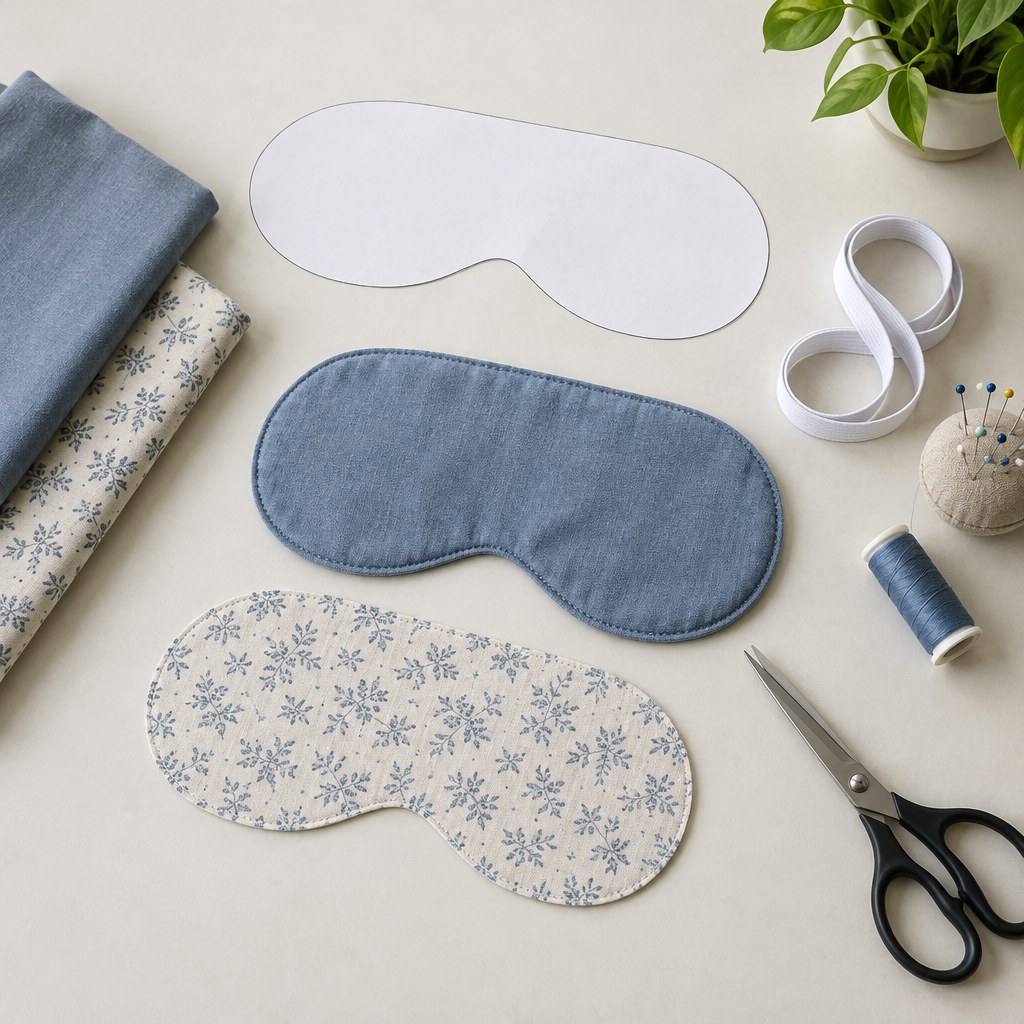
A sleep mask pattern is the template used to determine the mask’s shape, coverage, nose area, strap position and cutting lines. For a DIY mask, the most useful pattern is one you can print at a known scale, check against your intended finished size, and adapt before cutting your final fabric.
This guide explains how to use, size and adjust a sleep mask pattern without mixing the pattern-making intent with the separate sewing tutorial. It also covers the terms people commonly search together—free pattern, printable template, PDF pattern and sewing pattern—because they describe closely related parts of the same task.
Download the free printable sleep mask pattern
The Vendixia pattern is a basic flat adult sleep-mask template with a 10 mm (3/8 in) seam allowance already included. Choose the paper format used by your printer, print at 100% / Actual Size, and measure the 2 in × 2 in (50.8 mm) test square before cutting fabric.
Pattern specifications: one-size adult flat-mask template; approximate cutting width 210 mm (8.27 in); approximate cutting height 88 mm (3.46 in); cut 1 outer layer + 1 lining; optional batting if your construction uses it. Test the paper template for your intended fit before cutting final fabric.
What should a sleep mask pattern include?
A practical pattern should show the overall mask outline, the nose area, the side points where the strap will sit, and whether the cutting line already includes seam allowance. It should also state the intended print scale or provide a measurement you can check with a ruler after printing.
- Mask outline: controls forehead, cheek, temple and nose coverage.
- Center line: helps keep the design symmetrical when drafting or modifying it.
- Strap position: affects how the mask sits around the sides of the head.
- Seam allowance: must be clearly included or added before cutting.
- Scale reference: lets you verify that a printed template has not been enlarged or reduced unexpectedly.
Free printable sleep mask pattern: what to check before cutting
A downloadable or printable pattern is useful only when its scale is clear. Before placing it on fabric, print at the specified size rather than automatically using a printer option such as “fit to page.” Then measure the pattern’s reference mark or stated width to confirm that the page printed correctly.
If the dimensions are wrong, correct the print settings before changing the fabric pieces. A small scaling error on paper can become a noticeable fit problem around the nose, temples or strap once the mask is assembled.
How do you size a sleep mask pattern?
Start with the intended coverage rather than assuming one template will fit everyone identically. The pattern should cover the eye area comfortably, extend far enough toward the temples to reduce side gaps, and meet the nose area without requiring excessive strap tension.
Before cutting expensive or delicate fabric, make a paper test version. Hold it gently in position—without tightening anything around your head—and check four areas: eye coverage, nose clearance, temple coverage and strap attachment position. Adjust the paper template first.
Should you enlarge or reduce a printable pattern?
Only after verifying that it printed at its intended scale. If the original scale is correct but the coverage does not suit the intended fit, make controlled adjustments to the relevant areas rather than uniformly enlarging the entire pattern. Uniform scaling changes the nose, eye, temple and strap geometry at the same time.
Does a sleep mask pattern need seam allowance?
A sewn sleep mask needs allowance for the seams. The Vendixia downloadable pattern already includes 10 mm (3/8 in) seam allowance. If you use a different pattern, check its instructions before cutting because some templates show only the finished outline.
Do not guess whether a template includes seam allowance. Two patterns with the same visible finished shape can have different cutting dimensions depending on how their edges are constructed.
Flat vs contoured sleep mask patterns
A flat sleep mask pattern generally uses matching outer shapes for the main layers and is easier to understand as a first sewing project. A contoured mask needs additional shaping to create space around the eyes, so its pattern pieces and assembly method can be more complex.
The choice is therefore not simply cosmetic. Pattern geometry influences eye clearance, edge contact, nose fit and how the strap holds the mask in place. Read our contoured vs flat sleep mask comparison before adapting one construction style into the other.
How do you make your own sleep mask pattern?
You can draft a basic flat template by starting from the coverage you want, creating a symmetrical outline, shaping the lower center around the nose area, and marking the strap attachment points. Work on paper first and fold the template along its center line when useful to check symmetry.
- Sketch or trace the intended overall width and height on paper.
- Mark a vertical center line.
- Shape the upper edge and lower eye-area coverage.
- Refine the nose area rather than leaving a straight lower edge.
- Mark where the strap should meet each side.
- Check the paper template for coverage before adding or confirming seam allowance.
- Label the pattern with its version, scale and whether seam allowance is included.
This drafting process is appropriate for a simple flat mask. A contoured construction should use pattern pieces designed for that geometry rather than relying on an improvised flat outline.
What materials should you use with the pattern?
The pattern tells you what shape to cut; it does not determine which material is automatically best. Fabric thickness, drape, surface feel, care requirements, padding and strap construction can all change how the finished mask behaves.
Use our sleep mask materials comparison to evaluate silk, cotton, polyester, foam and related construction considerations before cutting your final pieces.
How should you place a sleep mask pattern on fabric?
Follow the fabric’s relevant grain or directional requirements when applicable, keep the template flat, and transfer the shape accurately. If the outer fabric has a directional print or nap, confirm its orientation before cutting the second piece. When several layers use the same outline, label them so that the face-side lining and outer layer are not confused during assembly.
Pattern mistakes that cause fit problems
- Printing a PDF with automatic page scaling and never checking its dimensions.
- Adding seam allowance again to the Vendixia pattern even though its 10 mm allowance is already included.
- Changing the entire scale to solve a problem that exists only around the nose or temples.
- Placing strap attachment points without considering the finished seam.
- Cutting final fabric before testing the template in paper.
- Using a flat pattern as if it were a contoured pattern without changing the construction.
How does the pattern fit into the complete DIY process?
The pattern is one stage of the project. Start with our How to Make a Sleep Mask hub for the complete workflow: pattern → materials → construction → fit → care. Then use How to Sew a Sleep Mask for assembly so this page can remain focused on template, sizing and pattern decisions.
Frequently asked questions
Is a sleep mask pattern the same as an eye mask pattern?
For sewing and DIY searches, the terms are often used for very similar fabric eye-covering templates. Check the actual shape and intended use rather than relying only on the file name.
Can you print a sleep mask pattern on normal paper?
Yes. Download the A4 or US Letter version that matches your printer paper, print at 100% / Actual Size, and verify the test square before cutting.
Should the Vendixia free PDF pattern be printed at 100%?
Yes. Print this pattern at 100% / Actual Size and verify that its test square measures exactly 2 in × 2 in (50.8 mm) before using the template.
Can you modify a sleep mask pattern for more eye space?
Changing the outer outline alone does not create the same eye clearance as a genuinely contoured construction. If eye space is the goal, compare the construction methods first and use pattern pieces intended for the chosen design.
Next step: from paper pattern to construction
Once the template has been printed, scale-checked and tested for coverage, choose compatible materials before cutting the final layers. Then follow the step-by-step sleep mask sewing tutorial, or use the no-sew sleep mask guide if you are deliberately using a non-sewn construction.
Editorial note: This guide provides general DIY information. Follow the instructions for your specific sewing equipment, fabrics and components, and supervise craft activities appropriately where needed.