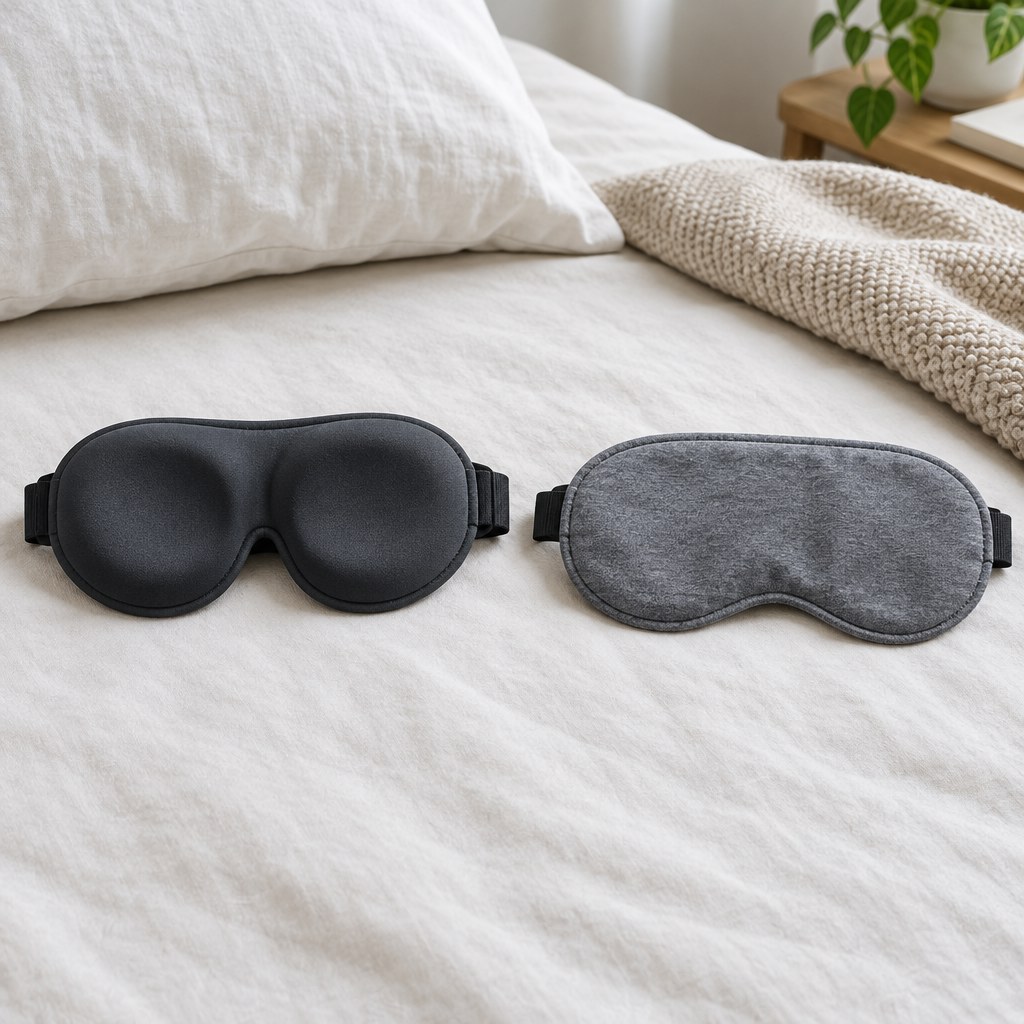
Sleep masks may look simple, but their shape changes how they sit around the eyes, nose and sides of the face. Two common designs are flat masks, which place fabric or padding across the eye area, and contoured masks, which use shaped eye cups or cavities to create space around the eyelids.
Neither design is automatically better. The useful question is which construction works with your face shape, sleeping position, sensitivity to pressure and care preferences.
1. Contoured and flat masks at a glance
| Feature | Contoured mask | Flat mask |
|---|---|---|
| Eye area | Shaped cavities can create eyelid space | Fabric or padding generally rests closer to the eye area |
| Profile | Usually more structured | Usually simpler and lower-profile |
| Packability | Shape may take more space | Often folds or packs more easily |
| Fit variables | Eye-cup position and depth matter | Overall shape, padding and fabric matter |
| Care | Construction can require more careful cleaning | Can be simpler, but always check the care label |
2. Why choose a contoured sleep mask?
The main reason to consider a contoured design is space around the eyes. A well-matched shape may reduce direct contact with the eyelids. That can appeal to people who simply dislike fabric resting close to the eye area.
The tradeoff is that contour geometry matters. If the cups do not align well with your face, the mask can feel bulky or leave gaps that let light in. More structure can also affect how the mask feels against a pillow.
3. Why choose a flat sleep mask?
Flat masks use a simpler construction and are often easy to pack. Soft fabrics and flexible padding can make them comfortable for people who prefer a low-profile design.
Because the mask sits closer to the eye area, fabric texture, padding and strap tension can have a bigger effect on comfort. A flat mask that is too tight is not improved simply because the material feels soft.
4. Think about sleeping position
Side sleepers may notice the edges, strap hardware or thickness of a structured mask more when the side of the face presses into a pillow. Back sleepers may have fewer pillow-contact issues, but fit still depends on individual facial features.
Instead of choosing a design only from a product photo, consider where the mask is thickest and where any buckles or adjusters will sit.
Use our side-sleeper sleep mask guide to compare the design details that matter against your pillow.
5. Which design is easier to make yourself?
For a DIY project, a flat sleep mask is usually the simpler construction because the main fabric layers can follow one basic outline. A contoured design needs deliberate shaping to create eye clearance, so the pattern pieces and assembly method matter more.
If you are making rather than buying a mask, start with the complete DIY sleep mask guide, then use the sleep mask pattern and sizing guide before cutting fabric. The dedicated sleep mask sewing tutorial covers assembly separately.
Can you turn a flat pattern into a contoured mask?
Not simply by changing the outer outline. A true contoured design creates three-dimensional space around the eyes through its pattern geometry or molded construction. If eye clearance is the goal, use a pattern intended for that construction rather than assuming a larger flat template will behave the same way.
6. Material still matters
Shape is only one part of comfort. Surface fabric, padding, elastic, foam and internal construction all influence how a mask feels and how it should be cleaned. Our sleep mask materials comparison explains common material tradeoffs in more detail.
For cleaning and storage, use the manufacturer’s instructions for the complete product rather than assuming that the outer fabric determines the washing method. See our sleep-mask care guide.
7. A practical fit checklist
- The mask blocks light well enough for your room and preferences
- The strap can be adjusted without excessive tightness
- The eye area feels comfortable
- The nose area does not create an obvious light gap
- Edges or hardware do not bother your usual sleeping position
- The material feels suitable against your skin
- The cleaning instructions fit your routine
If you want the broader buying framework, start with our complete guide to choosing a sleep mask.
8. Quick knowledge check
3-question check
Which design details matter?
Affiliate disclosure: As an Amazon Associate I earn from qualifying purchases.
Example of a contoured sleep mask
MZOO Luxury Sleep Mask is one example of the contoured style discussed in this guide. Its molded eye-cup design makes it a relevant option to compare if you want more space around the eyes than a traditional flat mask. Fit and comfort still depend on your face shape, strap adjustment and sleeping position.
Check current price and availability on Amazon
Prices and availability can change. We do not display a fixed Amazon price in this guide.
9. Final thoughts
Choose a sleep-mask shape by fit rather than by a universal ranking. Contoured masks can offer more eye space, while flat masks can offer a simpler, lower-profile design. The better option is the one that blocks light adequately, stays comfortable in your usual sleeping position and fits your care routine.
Sources and editorial note
This article provides general product-selection information. Vendixia does not claim that one sleep-mask design improves health outcomes, and it does not claim hands-on product testing unless an article explicitly says so.