THE QUICK VERSION
For a first project, start with a simple flat mask. Decide on sewn or no-sew construction before buying materials.
- Check the pattern scale and test its paper fit.
- Choose compatible outer fabric, lining and a comfortable strap.
- Assemble, inspect the edges and check the fit without over-tightening.
Open the materials, pattern and construction guide
A homemade sleep mask is a simple fabric project built from a face-covering pattern, a soft outer fabric and lining, an optional padding layer, and a strap that keeps the mask in place without excessive pressure. The basic process is to choose the design, size the pattern, select compatible materials, assemble the layers, attach the strap, and check the finished fit.
This guide gives you the complete roadmap. For the detailed work, it points to Vendixia’s focused guides on pattern design, materials, sewing, fit, and care so that each step can be explained properly without turning one article into several overlapping tutorials.
What do you need to make a sleep mask?
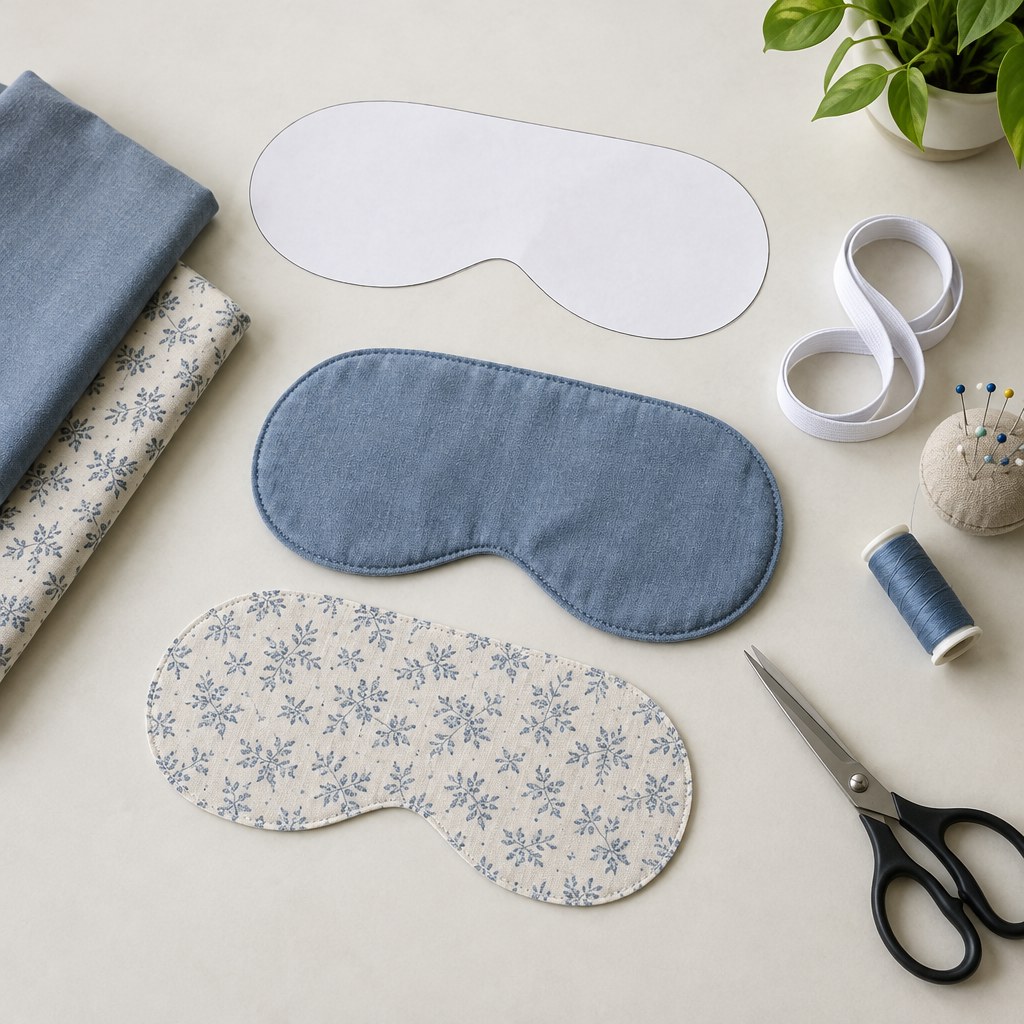
For a basic fabric sleep mask, you will generally need an outer fabric, a lining that will sit near the face, a pattern or template, a strap or elastic, and ordinary sewing supplies if you are making a sewn version. Some designs also use a thin padding or batting layer for structure and softness.
The right combination depends on the design. A flat mask can use a relatively simple pattern, while a contoured design requires more shaping to create space around the eyes. Fabric feel, thickness, washability, strap adjustment, and the way the layers behave together all matter more than choosing a material based on its name alone.
How do you make a sleep mask step by step?
- Choose the design. Decide whether you want a flat or shaped mask and how much eye and nose coverage you need.
- Prepare the pattern. Print or draw the template, check its scale, and adapt the size before cutting fabric.
- Select the materials. Choose the outer fabric, face-side lining, optional padding, and strap as a system rather than as separate parts.
- Cut the layers. Transfer the pattern carefully so the pieces align during assembly.
- Position the strap. Check its placement and approximate finished length before closing the mask.
- Assemble the mask. Join the layers using the construction method appropriate to your pattern.
- Finish and inspect it. Make sure edges are secure and that no bulky area creates an uncomfortable pressure point.
- Test the fit. The mask should block useful amounts of light without needing an excessively tight strap.
Start with the sleep mask pattern
The pattern controls more than the outline. It influences coverage around the nose, temple width, strap position, eye clearance, and how the finished mask sits when you change sleeping position.
Use our free sleep mask pattern and sizing guide for printable scaling, sizing checks, seam allowance, and the differences between a basic flat template and more shaped construction.
If you are deciding between the two main design families now, read Contoured vs Flat Sleep Masks. That comparison explains eye space, pressure, sleeping position, materials, adjustability, and care.
Choose materials that work together
A sleep mask is a small project, but the layers have different jobs. The outside contributes structure and appearance, the face-side layer affects how the mask feels against the skin, padding can change thickness and shape, and the strap controls stability.
There is no single fabric that is automatically best for every sleep mask. Silk, cotton, polyester, foam-backed constructions, and other materials differ in surface feel, care requirements, structure, and ease of handling.
For a detailed comparison, see Sleep Mask Materials Compared: Silk, Cotton, Polyester and Foam. That guide also covers DIY material selection, including lining, padding and strap considerations.
Flat or contoured: which design is easier to make?
A flat sleep mask is generally the simpler starting point because the main fabric layers can follow the same basic outline. A contoured mask uses additional shaping to create eye space, so accurate pattern construction becomes more important.
That does not make one design universally better. The useful question is whether you value simpler construction or additional eye clearance, and whether the finished mask fits your face without relying on excessive strap tension.
How do you sew a sleep mask?
In a sewn version, the usual workflow is to prepare matching fabric pieces, arrange the layers in the correct orientation, position the strap, sew around the perimeter while leaving a turning opening when the pattern requires one, turn the project, then close and finish the opening. Exact seam allowance and layer order should follow the pattern you are using.
Our dedicated How to Sew a Sleep Mask tutorial covers this construction process in detail, including an option for hand sewing. Keeping those instructions in a dedicated tutorial prevents this hub page from competing with the sewing-specific search intent.
Can you make a sleep mask without sewing?
Yes. A no-sew sleep mask is a separate DIY approach in which the pieces are assembled without a stitched perimeter. The material and edge-finishing method need to be chosen for that construction method rather than simply removing the sewing step from a conventional pattern.
Use How to Make a Sleep Mask Without Sewing when avoiding sewing is part of the project requirement. It remains separate because it answers a different practical need from a standard sewing tutorial.
How should a homemade sleep mask fit?
A finished mask should cover the eye area effectively while remaining stable without excessive pressure. Check the nose area for light gaps, the temples for unnecessary compression, the strap for stability, and the eye area for the amount of clearance you prefer.
If you want to understand those fit trade-offs before choosing or modifying a pattern, see How to Choose a Sleep Mask That Fits.
Plan for cleaning before you build it
Care requirements are easier to manage when the materials are chosen before construction. Combining layers with very different washing or drying requirements can make the finished mask harder to maintain.
Check the care information for every material you use and follow the most restrictive applicable instructions. Our sleep mask washing and care guide explains the practical differences among common material types.
Common DIY sleep mask mistakes
- Choosing fabric only for appearance without considering the face-side feel or care instructions.
- Cutting a pattern before checking print scale or finished dimensions.
- Making the strap tight to compensate for poor pattern fit.
- Adding too much bulk near the nose or edges.
- Combining layers that require incompatible care.
- Trying to make one pattern behave like both a flat and a contoured design without adjusting its construction.
Frequently asked questions
What is the easiest type of sleep mask to make?
A basic flat fabric mask is usually the most straightforward starting design because it requires less shaping than a contoured construction. Pattern accuracy and strap placement still matter for the final fit.
Do you need padding in a sleep mask?
Not necessarily. Padding can add structure or softness, but the appropriate amount depends on the fabrics and pattern. More padding is not automatically more comfortable because extra thickness can also affect edges, fit, and care.
Can you make your own sleep mask pattern?
Yes. A pattern can be drafted from the intended finished dimensions and then adjusted for coverage, nose shape, strap placement and seam allowance. A printable template is often easier for a first project because its scale can be checked before cutting.
Can a sleep mask be hand sewn?
Yes. A simple fabric design can be assembled with hand stitching, although it generally takes longer than machine sewing. Stitch consistency and secure finishing are more important than speed.
Where to go next
Think of this page as the map for the project: pattern → materials → construction → fit → care. The dedicated guides linked above now cover each stage in depth, including the printable pattern, sewn construction and no-sew alternative.
Editorial note: Vendixia provides general educational information. Always follow the instructions supplied with the fabrics, components, tools, and products you use.